


The Epiphany of the Lord - 4 January 2026
4th January 2026
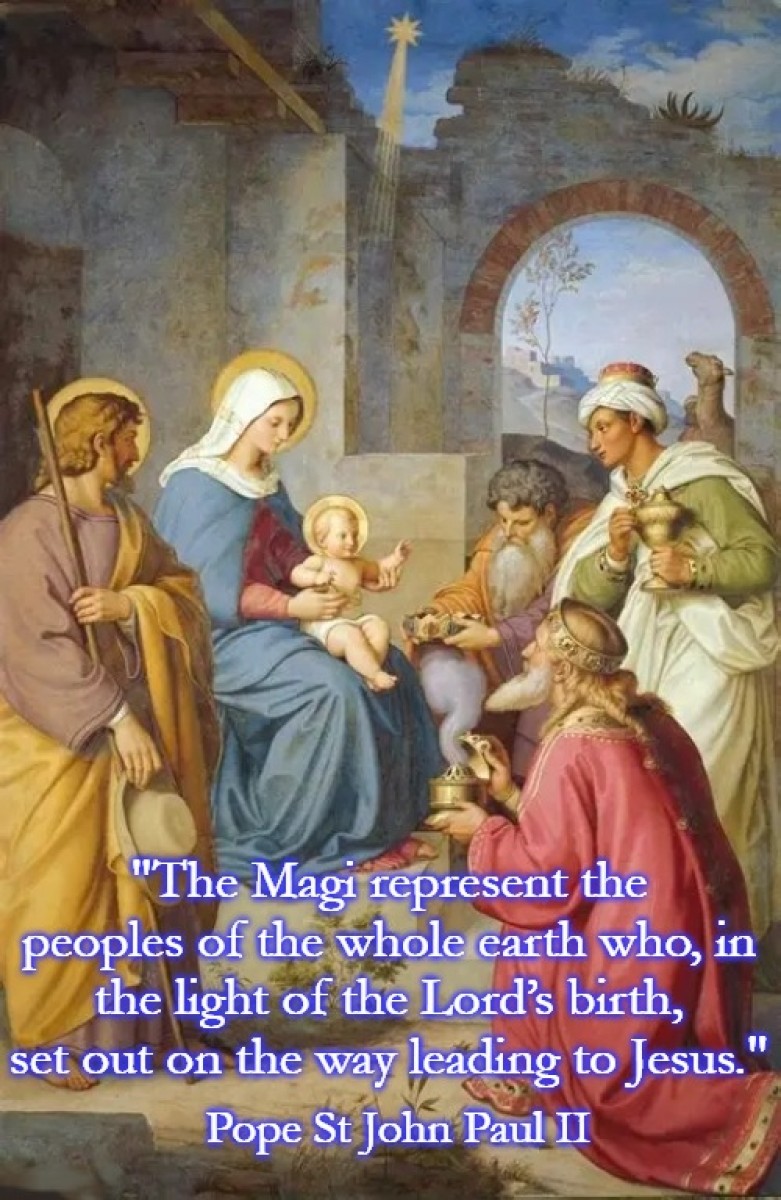
"On entering into the little shed these holy pilgrims feel a joy which they had never felt before; they feel their hearts chained to the dear little infant Whom they behold ... The infant looks upon them with a joyful countenance and this is the mark of affection, with which He accepts them amongst the first-fruits of His Redemption.” - St Alphonsus Liguori
An excerpt of the Homily by Pope St John Paul II on the Feast of the Epiphany, Monday, 6 January 1996:
“Arise [Jerusalem], shine; for your light has come, and the glory of the Lord has risen upon you” (Isaiah 1:1).
Today, the Solemnity of Epiphany, this is how the prophet’s words resound. The ancient, evocative oracle of Isaiah in a way foretells the light that shone on the stable in Bethlehem on Christmas night, anticipating the angels' song: “Glory to God in the highest, and on earth peace among men with whom he is pleased” (Lk 2:14). In a certain sense, in pointing to the light the prophet is pointing to Christ. As it shone for the shepherds seeking the newborn Messiah, so this light shines today on the path of the Magi, come from the East to adore him who was born King of the Jews.
The Magi represent the peoples of the whole earth who, in the light of the Lord’s birth, set out on the way leading to Jesus and, in a certain sense, are the first to receive that salvation inaugurated by the Saviour’s birth and brought to fulfilment in the paschal mystery of his Death and Resurrection.
When they reached Bethlehem, the Magi adored the divine Child and offered him symbolic gifts, becoming forerunners of the peoples and nations which down the centuries never cease to seek and meet Christ.
In the second reading from the Letter to the Ephesians, the Apostle Paul comments with deep wonder on the mystery celebrated in today’s solemnity: “Assuming that you have heard of the stewardship of God’s grace that was given to me for you, how the mystery was made known to me by revelation.... the mystery of Christ, which was not made known to the sons of men in other generations as it has now been revealed to his holy apostles and prophets by the Spirit; that is, how the Gentiles are fellow heirs, members of the same body, and partakers of the promise in Christ Jesus through the Gospel (Eph 3:2-3; 5-6). A son of the chosen nation, converted to Christ, Paul came to share in divine Revelation, after the other Apostles, to transmit it to the nations of the whole world. After this great turning point in his life, he understood that all peoples have been chosen as well and that all men are called to salvation because they are “partakers of the promise in Christ Jesus through the Gospel” (Eph 3:6). Indeed, the light of Christ and the universal call to salvation are meant for the peoples of all the earth. “This character of universality which adorns the People of God is a gift from the Lord himself whereby the Catholic Church ceaselessly and efficaciously seeks for the return of all humanity and all its goods under Christ the Head in the unity of his Spirit” (Lumen gentium, n. 13).
Thus we understand the full meaning of Epiphany, presented by Paul in the way in which he himself understood and practised it. The Apostle’s task is to spread the Gospel throughout the world, proclaiming to mankind the redemption wrought by Christ and to lead all humanity on the path of salvation, manifested by God on the night in Bethlehem. The Church’s missionary activity, through its many stages down the centuries, finds its starting point and universal scope in the feast of Epiphany.
Prayer for the Epiphany of the Lord
Dear Jesus, as You led the Three Kings to You by the light of a star, please draw us ever closer to You by the light of Faith. Help us to desire You as ardently as they did. Give us the grace to overcome all the obstacles that keep us far from You. May we, like them, have something to give You when we appear before You. Amen.
The Epiphany Blessing
Marking Homes with Blessed Chalk for the New Year
The ancient custom of marking the door of the home with blessed chalk is a way of incorporating the liturgical feast of the Epiphany as a domestic ritual into the prayer life of the family. Chalk will be blessed at Mass this weekend, then parishioners are welcome to take some home and to mark the lintel of their front door as follows:
20 C + M + B 26
The letters C, M and B stand for the traditional names of the Three Wise Men who came seeking Jesus: Caspar, Melchior, and Balthasar. The letters also represent the words Christus Mansionem Benedicat (May Christ Bless this Abode).
Words to be said at home:
Peace be upon this house and with all of us who live here. Amen.
Read aloud Matthew 2:1-2, 10-11
The wise men from the East came to Jerusalem asking: Where is the child who has been born king of the Jews? For we observed His star at its rising and have come to pay Him homage. When they saw that the star had stopped, they were overwhelmed with joy. On entering the house, they saw the child with Mary His mother, and they knelt down and paid Him homage.
The Gospel of the Lord. Praise to you, Lord Jesus Christ.
Then continue with these words, whilst making the chalk marks at the names of the wise men and the year:
The Three Wise Men, Caspar (C) Melchior (M) Balthasar (B) followed the light of the star to find Jesus, the Son of God, Who came to live among us Two Thousand (20) and Twenty-six (26) years ago. (+) May Christ bless our home today and (+) remain with us throughout the year.
Let us pray. God of mercy, fill our home with the light and love of Christ that it may be a place of hospitality and welcome. May Christ be our shelter when we are at home, our companion when we are away, and our welcome guest when we return. Through Christ our Lord. Amen.
Let us bless the Lord. Thanks be to God.
In the name of the Father, and of the Son, and of the Holy Spirit. Amen.